← Back to document 405
AI review — page 13
claude-opus-4-8 · prompt v7 · 2026-08-21T10:45:12+00:00 · applied: yes · changed: yes
Screenshot sent to the model (reading-order tags burned on)
Instructions (system prompt)
The screenshot has annotations burned onto it that are NOT part of the document:
- a small red numbered tag at the top-left corner of each item, showing that item's position in the OCR-determined reading order (the same order the items appear in the json data);
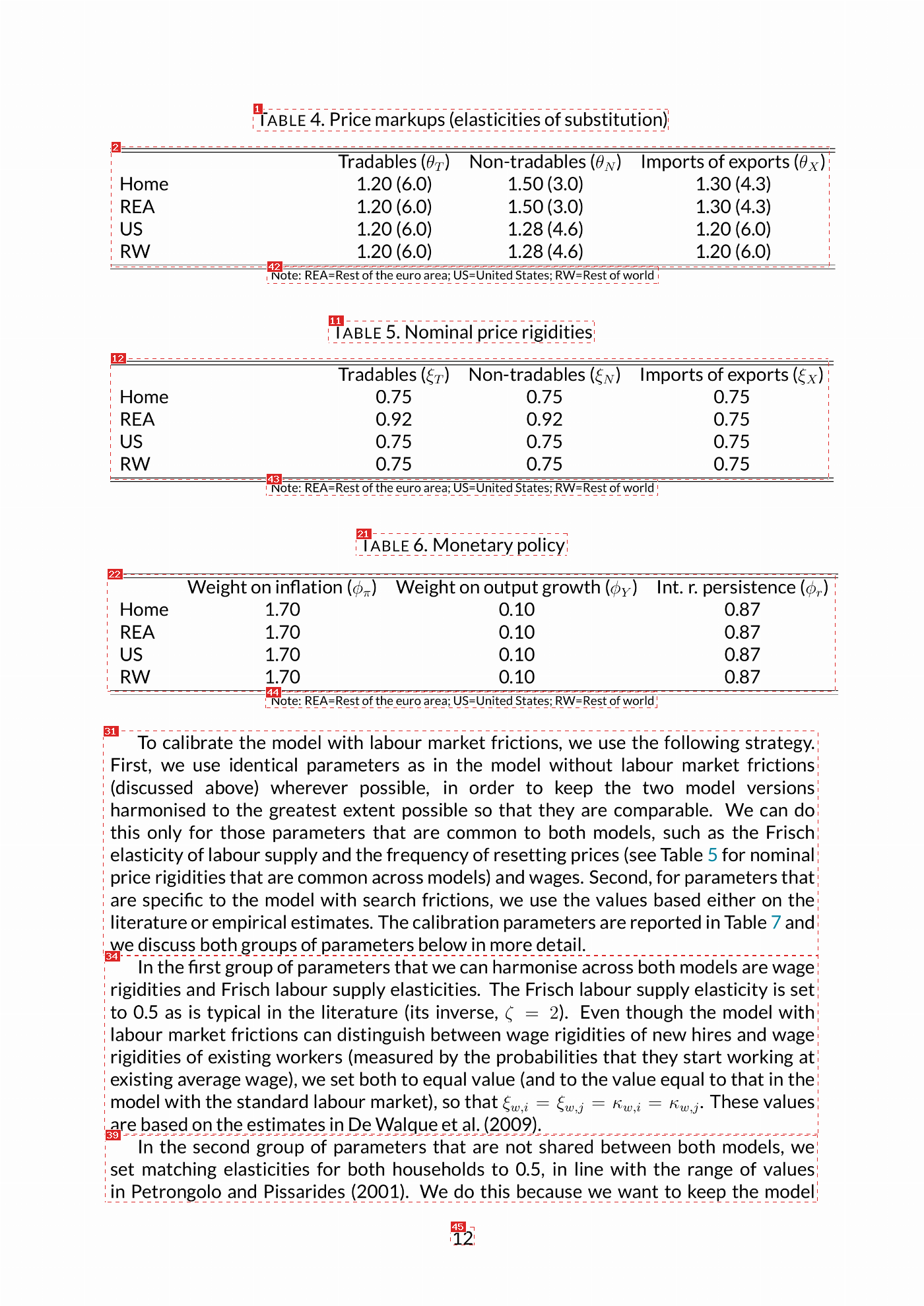
- a red-and-white dotted outline around each item, showing the area the OCR detected for that content block.
Use the tags and outlines to see the detected reading order and item boundaries directly on the page, and judge that sequence against how a human would naturally read it. Ignore the annotations when checking text fidelity — they overlay the content, they are not content.

For the given screenshot of a PDF's page and the attached json data, I want you to perform the following tasks in order...

Review the reading order set out in the json data and compare to what a natural reading order for that of a human would be by looking at the screenshot. Decide on any changes and re-arrange the items for the most logical reading order.
Look at all text for each item and correct any extraction errors like missing words, spelling mistakes etc.
Look at each item in the JSON and ensure that the OCR process has identified the item as the correct type: text, list item etc.
Look for any text that duplicates: if two items next to each other contain the exact same text but the text only appears once on the screenshot, one of them is an extraction error — keep the item whose box matches where the text is visible and flag the other for removal.
Make amendments as you proceed through the items and list of instructions.
Reading Order Advice: If there is columns with headings and text, I wouldnt expect the reading order to jump from one heading straight to another if there is text associated with that heading.

Return format: Give me the json data back only, with the amendments you make.

Mechanical notes (so your answer can be applied automatically):
- Each item has an `id` — keep every item and its `id` exactly as given; never invent, drop or duplicate ids. Re-arranging means changing the position of items (and their nesting) in the arrays.
- Never move text (or a type) from one item to another: each item's coordinates travel with its id, so to change reading order you must move the whole item object, and text amendments must be in-place corrections of that item's own text.
- To flag a duplicate item, keep it in the array and add `"remove": "duplicate"` to it — never just delete it (deleted items are restored automatically).
- ids are opaque labels, not sequence numbers: never renumber them. After a removal or re-arrangement, every remaining item keeps the exact id it came with, even if the ids no longer look sequential.
- Text may contain `[pN.M…]` placeholders marking where an inline formula belongs — treat them as part of the text and leave them exactly where they are.
- `box` is [left, top, right, bottom] as percentages of the page from the top-left corner; return it unchanged.
- Respond with raw JSON only: no code fences, no commentary, same shape as the input (`{"items": [...]}`).
User message (json data sent)
Page 13 json data:

{"items":[{"id":"p13.1","type":"caption","box":[27,8,72,10],"text":"TABLE 4. Price markups (elasticities of substitution)"},{"id":"p13.2","type":"table","box":[12,11,90,20],"text":"","children":[{"id":"p13.2.1","type":"table_cell","box":[12,11,31,13],"text":""},{"id":"p13.2.2","type":"table_cell","box":[31,11,51,13],"text":"Tradables $ \\theta_T $"},{"id":"p13.2.3","type":"table_cell","box":[51,11,70,13],"text":"Non-tradables $ \\theta_N $"},{"id":"p13.2.4","type":"table_cell","box":[69,12,85,13],"text":"Imports of exports $ \\theta_X $"},{"id":"p13.2.5","type":"table_cell","box":[13,13,18,20],"text":"Home\nREA\nUS\nRW"},{"id":"p13.2.6","type":"table_cell","box":[38,13,47,20],"text":"1.20 (6.0)\n1.20 (6.0)\n1.20 (6.0)\n1.20 (6.0)"},{"id":"p13.2.7","type":"table_cell","box":[55,13,63,20],"text":"1.50 (3.0)\n1.50 (3.0)\n1.28 (4.6)\n1.28 (4.6)"},{"id":"p13.2.8","type":"table_cell","box":[75,13,83,20],"text":"1.30 (4.3)\n1.30 (4.3)\n1.20 (6.0)\n1.20 (6.0)"}]},{"id":"p13.3","type":"caption","box":[36,25,64,26],"text":"TABLE 5. Nominal price rigidities"},{"id":"p13.4","type":"table","box":[12,27,90,37],"text":"","children":[{"id":"p13.4.1","type":"table_cell","box":[12,27,31,29],"text":""},{"id":"p13.4.2","type":"table_cell","box":[31,27,51,29],"text":"Tradables $ \\xi_T $"},{"id":"p13.4.3","type":"table_cell","box":[51,27,70,29],"text":"Non-tradables $ \\xi_N $"},{"id":"p13.4.4","type":"table_cell","box":[69,28,85,30],"text":"Imports of exports $ \\xi_X $"},{"id":"p13.4.5","type":"table_cell","box":[13,29,18,36],"text":"Home\nREA\nUS\nRW"},{"id":"p13.4.6","type":"table_cell","box":[41,29,45,36],"text":"0.75\n0.92\n0.75\n0.75"},{"id":"p13.4.7","type":"table_cell","box":[57,29,61,36],"text":"0.75\n0.92\n0.75\n0.75"},{"id":"p13.4.8","type":"table_cell","box":[77,29,81,36],"text":"0.75\n0.75\n0.75\n0.75"}]},{"id":"p13.5","type":"caption","box":[39,41,61,43],"text":"TABLE 6. Monetary policy"},{"id":"p13.6","type":"table","box":[12,44,90,53],"text":"","children":[{"id":"p13.6.1","type":"table_cell","box":[12,44,31,46],"text":""},{"id":"p13.6.2","type":"table_cell","box":[20,44,37,46],"text":"Weight on inflation $ \\phi_{\\pi} $"},{"id":"p13.6.3","type":"table_cell","box":[43,44,65,46],"text":"Weight on output growth $ \\phi_{Y} $"},{"id":"p13.6.4","type":"table_cell","box":[71,44,86,46],"text":"Int. r. persistence $ \\phi_{r} $"},{"id":"p13.6.5","type":"table_cell","box":[13,46,18,53],"text":"Home\nREA\nUS\nRW"},{"id":"p13.6.6","type":"table_cell","box":[29,46,32,53],"text":"1.70\n1.70\n1.70\n1.70"},{"id":"p13.6.7","type":"table_cell","box":[54,46,58,53],"text":"0.10\n0.10\n0.10\n0.10"},{"id":"p13.6.8","type":"table_cell","box":[78,46,82,53],"text":"0.87\n0.87\n0.87\n0.87"}]},{"id":"p13.7","type":"text","box":[11,56,89,73],"text":"To calibrate the model with labour market frictions, we use the following strategy. First, we use identical parameters as in the model without labour market frictions (discussed above) wherever possible, in order to keep the two model versions harmonised to the greatest extent possible so that they are comparable. We can do this only for those parameters that are common to both models, such as the Frisch elasticity of labour supply and the frequency of resetting prices (see Table 5 for nominal price rigidities that are common across models) and wages. Second, for parameters that are specific to the model with search frictions, we use the values based either on the literature or empirical estimates. The calibration parameters are reported in Table 7 and we discuss both groups of parameters below in more detail.","children":[{"id":"p13.7.1","type":"link","box":[76,65,78,66],"text":"5"},{"id":"p13.7.2","type":"link","box":[83,70,85,71],"text":"7"}]},{"id":"p13.8","type":"text","box":[11,73,89,87],"text":"In the first group of parameters that we can harmonise across both models are wage rigidities and Frisch labour supply elasticities. The Frisch labour supply elasticity is set to 0.5 as is typical in the literature (its inverse,[p13.8.3]). Even though the model with labour market frictions can distinguish between wage rigidities of new hires and wage rigidities of existing workers (measured by the probabilities that they start working at existing average wage), we set both to equal value (and to the value equal to that in the model with the standard labour market), so that[p13.8.4]. These values are based on the estimates in De Walque et al. (2009).","children":[{"id":"p13.8.1","type":"link","box":[37,85,52,87],"text":"De Walque et al."},{"id":"p13.8.2","type":"link","box":[53,85,58,87],"text":"(2009)."},{"id":"p13.8.3","type":"formula","box":[11,73,89,87],"text":"ζ = 2"},{"id":"p13.8.4","type":"formula","box":[11,73,89,87],"text":"\\xi_{w,i} = \\xi_{w,j} = \\kappa_{w,i} = \\kappa_{w,j}"}]},{"id":"p13.9","type":"text","box":[11,87,88,92],"text":"In the second group of parameters that are not shared between both models, we set matching elasticities for both households to 0.5, in line with the range of values in Petrongolo and Pissarides (2001). We do this because we want to keep the model","children":[{"id":"p13.9.1","type":"link","box":[14,90,37,92],"text":"Petrongolo and Pissarides"},{"id":"p13.9.2","type":"link","box":[38,90,43,92],"text":"(2001)."}]},{"id":"p13.10","type":"footnote","box":[29,20,71,22],"text":"Note: REA=Rest of the euro area; US=United States; RW=Rest of world"},{"id":"p13.11","type":"footnote","box":[29,37,71,38],"text":"Note: REA=Rest of the euro area; US=United States; RW=Rest of world"},{"id":"p13.12","type":"footnote","box":[29,53,71,54],"text":"Note: REA=Rest of the euro area; US=United States; RW=Rest of world"},{"id":"p13.13","type":"footer","box":[49,94,51,95],"text":"12"}]}
Model response
{"items":[{"id":"p13.1","type":"caption","box":[27,8,72,10],"text":"TABLE 4. Price markups (elasticities of substitution)"},{"id":"p13.2","type":"table","box":[12,11,90,20],"text":"","children":[{"id":"p13.2.1","type":"table_cell","box":[12,11,31,13],"text":""},{"id":"p13.2.2","type":"table_cell","box":[31,11,51,13],"text":"Tradables $ \\theta_T $"},{"id":"p13.2.3","type":"table_cell","box":[51,11,70,13],"text":"Non-tradables $ \\theta_N $"},{"id":"p13.2.4","type":"table_cell","box":[69,12,85,13],"text":"Imports of exports $ \\theta_X $"},{"id":"p13.2.5","type":"table_cell","box":[13,13,18,20],"text":"Home\nREA\nUS\nRW"},{"id":"p13.2.6","type":"table_cell","box":[38,13,47,20],"text":"1.20 (6.0)\n1.20 (6.0)\n1.20 (6.0)\n1.20 (6.0)"},{"id":"p13.2.7","type":"table_cell","box":[55,13,63,20],"text":"1.50 (3.0)\n1.50 (3.0)\n1.28 (4.6)\n1.28 (4.6)"},{"id":"p13.2.8","type":"table_cell","box":[75,13,83,20],"text":"1.30 (4.3)\n1.30 (4.3)\n1.20 (6.0)\n1.20 (6.0)"}]},{"id":"p13.10","type":"footnote","box":[29,20,71,22],"text":"Note: REA=Rest of the euro area; US=United States; RW=Rest of world"},{"id":"p13.3","type":"caption","box":[36,25,64,26],"text":"TABLE 5. Nominal price rigidities"},{"id":"p13.4","type":"table","box":[12,27,90,37],"text":"","children":[{"id":"p13.4.1","type":"table_cell","box":[12,27,31,29],"text":""},{"id":"p13.4.2","type":"table_cell","box":[31,27,51,29],"text":"Tradables $ \\xi_T $"},{"id":"p13.4.3","type":"table_cell","box":[51,27,70,29],"text":"Non-tradables $ \\xi_N $"},{"id":"p13.4.4","type":"table_cell","box":[69,28,85,30],"text":"Imports of exports $ \\xi_X $"},{"id":"p13.4.5","type":"table_cell","box":[13,29,18,36],"text":"Home\nREA\nUS\nRW"},{"id":"p13.4.6","type":"table_cell","box":[41,29,45,36],"text":"0.75\n0.92\n0.75\n0.75"},{"id":"p13.4.7","type":"table_cell","box":[57,29,61,36],"text":"0.75\n0.92\n0.75\n0.75"},{"id":"p13.4.8","type":"table_cell","box":[77,29,81,36],"text":"0.75\n0.75\n0.75\n0.75"}]},{"id":"p13.11","type":"footnote","box":[29,37,71,38],"text":"Note: REA=Rest of the euro area; US=United States; RW=Rest of world"},{"id":"p13.5","type":"caption","box":[39,41,61,43],"text":"TABLE 6. Monetary policy"},{"id":"p13.6","type":"table","box":[12,44,90,53],"text":"","children":[{"id":"p13.6.1","type":"table_cell","box":[12,44,31,46],"text":""},{"id":"p13.6.2","type":"table_cell","box":[20,44,37,46],"text":"Weight on inflation $ \\phi_{\\pi} $"},{"id":"p13.6.3","type":"table_cell","box":[43,44,65,46],"text":"Weight on output growth $ \\phi_{Y} $"},{"id":"p13.6.4","type":"table_cell","box":[71,44,86,46],"text":"Int. r. persistence $ \\phi_{r} $"},{"id":"p13.6.5","type":"table_cell","box":[13,46,18,53],"text":"Home\nREA\nUS\nRW"},{"id":"p13.6.6","type":"table_cell","box":[29,46,32,53],"text":"1.70\n1.70\n1.70\n1.70"},{"id":"p13.6.7","type":"table_cell","box":[54,46,58,53],"text":"0.10\n0.10\n0.10\n0.10"},{"id":"p13.6.8","type":"table_cell","box":[78,46,82,53],"text":"0.87\n0.87\n0.87\n0.87"}]},{"id":"p13.12","type":"footnote","box":[29,53,71,54],"text":"Note: REA=Rest of the euro area; US=United States; RW=Rest of world"},{"id":"p13.7","type":"text","box":[11,56,89,73],"text":"To calibrate the model with labour market frictions, we use the following strategy. First, we use identical parameters as in the model without labour market frictions (discussed above) wherever possible, in order to keep the two model versions harmonised to the greatest extent possible so that they are comparable. We can do this only for those parameters that are common to both models, such as the Frisch elasticity of labour supply and the frequency of resetting prices (see Table 5 for nominal price rigidities that are common across models) and wages. Second, for parameters that are specific to the model with search frictions, we use the values based either on the literature or empirical estimates. The calibration parameters are reported in Table 7 and we discuss both groups of parameters below in more detail.","children":[{"id":"p13.7.1","type":"link","box":[76,65,78,66],"text":"5"},{"id":"p13.7.2","type":"link","box":[83,70,85,71],"text":"7"}]},{"id":"p13.8","type":"text","box":[11,73,89,87],"text":"In the first group of parameters that we can harmonise across both models are wage rigidities and Frisch labour supply elasticities. The Frisch labour supply elasticity is set to 0.5 as is typical in the literature (its inverse,[p13.8.3]). Even though the model with labour market frictions can distinguish between wage rigidities of new hires and wage rigidities of existing workers (measured by the probabilities that they start working at existing average wage), we set both to equal value (and to the value equal to that in the model with the standard labour market), so that[p13.8.4]. These values are based on the estimates in De Walque et al. (2009).","children":[{"id":"p13.8.1","type":"link","box":[37,85,52,87],"text":"De Walque et al."},{"id":"p13.8.2","type":"link","box":[53,85,58,87],"text":"(2009)."},{"id":"p13.8.3","type":"formula","box":[11,73,89,87],"text":"ζ = 2"},{"id":"p13.8.4","type":"formula","box":[11,73,89,87],"text":"\\xi_{w,i} = \\xi_{w,j} = \\kappa_{w,i} = \\kappa_{w,j}"}]},{"id":"p13.9","type":"text","box":[11,87,88,92],"text":"In the second group of parameters that are not shared between both models, we set matching elasticities for both households to 0.5, in line with the range of values in Petrongolo and Pissarides (2001). We do this because we want to keep the model","children":[{"id":"p13.9.1","type":"link","box":[14,90,37,92],"text":"Petrongolo and Pissarides"},{"id":"p13.9.2","type":"link","box":[38,90,43,92],"text":"(2001)."}]},{"id":"p13.13","type":"footer","box":[49,94,51,95],"text":"12"}]}